
IoT Pro
Energy Module
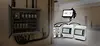
Centralises multiple single-phase and three-phase energy meters via RS485 Modbus and pulse using a single IoT Pro Energy Module, with integrated on/off control capability. Ideal for monitoring main switchgear, sub-metering in commercial facilities, and high-consumption or production-critical equipment.
Product Code: IOTPRO-ENERGY-MODULE
Product Overview
The IoT Pro Energy Module is a retrofit electrical measurement module designed to acquire voltage and current from existing electrical systems (via voltage taps and current transformers) and convert those signals into structured, auditable electrical measurements for software platforms.
It is intended for deployment at real installation points and interfaces with existing switchgear such as main incomers, distribution boards, sub-feeders, and equipment circuits where visibility into consumption, runtime behaviour, and power quality is required.
From a system architecture perspective, the module functions as a dedicated electrical data acquisition node that provides deterministic behaviour and predictable data structures suitable for:


Energy management and cost allocation
Equipment and process monitoring
Power quality investigation, event correlation, and predictive maintenance
Multi-site deployments where integrations must remain stable over time
Typical Installation Points
The IoT Pro Energy Module is typically installed at electrical nodes that represent meaningful cost, risk, or operational impact. This module is particularly suited to phased rollouts, start with the main feeder, then expand to the circuits that drive cost, downtime, or dispute.
Main Incomers

Utility Incomers / MDB / MSB
Sub-Distribution Panels

SMDBs / MCCs / Critical Feeders
High-Load Equipment

Compressors / HVAC / Pumps / Boilers
Cold-Chain Feeds

Cold Rooms / Blast Chillers / Freezers
Multi-Tenant Feeders

Tenant Supplies / Common-Area Feeders
UPS & Generators

Data Rooms / Telecom / NOC Sites
EV Charging Stations

EV Feeders / High-Variance Loads
Measurement & Functional Capabilities
The IoT Pro Energy Module is implemented as a CT-operated multifunction metering platform capable of measuring consumption, electrical loading, and power quality parameters commonly required for industrial analysis and billing-grade monitoring.
Electrical Measurement Interface
The module acquires:
-
Voltage via fused voltage tapping 3-Phase 4-Wire or 3-Phase 3-Wire systems (L-N / L-L as applicable)
-
Current via external current transformers (CTs)
The embedded metering engine is based on a CT-operated multifunction meter architecture commonly used for 3-phase monitoring, including MID-certification.
Metering & Power Quality Parameters
Typical parameters available on this class of metering engine include:
Current
Power
Voltage
Accumulation
Harmonics
Current
Power
Voltage
Accumulation
Harmonics
Current
Voltage
Power
Accumulation
Harmonics
Current Measurement (via External CTs)
Current Sensor Type | Split-core current transformers |
Supported CT Ranges | 100 A / 250 A / 500 A / 1000 A / 2000 A |
Current Measurement Type | Three phase current (per phase)
Single phase current |
Current Accuracy Class | 0.5% accuracy |
Split-core CTs allow retrofit installation without disconnecting conductors, making the module suitable for live electrical panels and phased deployments.
Energy Accumulation
Import Active Energy | kWh |
Export Active Energy | kWh |
Total Active Energy | kWh |
Import Reactive Energy | kVArh |
Export Reactive Energy | kVArh |
Total Reactive Energy | kVArh |
These parameters support cost allocation, billing analysis, runtime inference, and long-term energy trend analysis.
Power, Energy & Demand Parameters
Active Power | kW |
Reactive Power | kVAr |
Apparent Power | kVA |
Power Factor | PF |
Power Maximum Demand | MD kW |
Frequency | Hz |
Voltage Measurement
Voltage Input Range | 85 VAC to 264 VAC (L–N) or equivalent voltage (L-L) |
Voltage Measurement Type | Three phase voltage to neutral or Three phase voltage line to line
Single phase voltage to neutral |
Voltage inputs are fused per phase during installation to ensure safe and compliant operation.
Harmonics & Power Quality Indicators
Voltage Total Harmonic Distortion | U%THD (3-Phase Only) |
Current Total Harmonic Distortion | I%THD (3-Phase Only) |
Frequency Deviation | Hz |
Power quality parameters are time-aligned with load behaviour to support root-cause analysis of equipment stress, inefficiencies, and electrical events.
Current Measurement (via External CTs)
Current Sensor Type | Split-core current transformers |
Supported CT Ranges | 100 A / 250 A / 500 A / 1000 A / 2000 A |
Current Measurement Type | Three phase current (per phase)
Single phase current |
Current Accuracy Class | 0.5% accuracy |
Split-core CTs allow retrofit installation without disconnecting conductors, making the module suitable for live electrical panels and phased deployments.
Energy Accumulation
Import Active Energy | kWh |
Export Active Energy | kWh |
Total Active Energy | kWh |
Import Reactive Energy | kVArh |
Export Reactive Energy | kVArh |
Total Reactive Energy | kVArh |
These parameters support cost allocation, billing analysis, runtime inference, and long-term energy trend analysis.
Power, Energy & Demand Parameters
Active Power | kW |
Reactive Power | kVAr |
Apparent Power | kVA |
Power Factor | PF |
Power Maximum Demand | MD kW |
Frequency | Hz |
Voltage Measurement
Voltage Input Range | 85 VAC to 264 VAC (L–N) or equivalent voltage (L-L) |
Voltage Measurement Type | Three phase voltage to neutral or Three phase voltage line to line
Single phase voltage to neutral |
Voltage inputs are fused per phase during installation to ensure safe and compliant operation.
Harmonics & Power Quality Indicators
Voltage Total Harmonic Distortion | U%THD (3-Phase Only) |
Current Total Harmonic Distortion | I%THD (3-Phase Only) |
Frequency Deviation | Hz |
Power quality parameters are time-aligned with load behaviour to support root-cause analysis of equipment stress, inefficiencies, and electrical events.
Current Measurement (via External CTs)
Current Sensor Type | Split-core current transformers |
Supported CT Ranges | 100 A / 250 A / 500 A / 1000 A / 2000 A |
Current Measurement Type | Three phase current (per phase)
Single phase current |
Current Accuracy Class | 0.5% accuracy |
Split-core CTs allow retrofit installation without disconnecting conductors, making the module suitable for live electrical panels and phased deployments.
Energy Accumulation
Import Active Energy | kWh |
Export Active Energy | kWh |
Total Active Energy | kWh |
Import Reactive Energy | kVArh |
Export Reactive Energy | kVArh |
Total Reactive Energy | kVArh |
These parameters support cost allocation, billing analysis, runtime inference, and long-term energy trend analysis.
Power, Energy & Demand Parameters
Active Power | kW |
Reactive Power | kVAr |
Apparent Power | kVA |
Power Factor | PF |
Power Maximum Demand | MD kW |
Frequency | Hz |
Voltage Measurement
Voltage Input Range | 85 VAC to 264 VAC (L–N) or equivalent voltage (L-L) |
Voltage Measurement Type | Three phase voltage to neutral or Three phase voltage line to line
Single phase voltage to neutral |
Voltage inputs are fused per phase during installation to ensure safe and compliant operation.
Harmonics & Power Quality Indicators
Voltage Total Harmonic Distortion | U%THD (3-Phase Only) |
Current Total Harmonic Distortion | I%THD (3-Phase Only) |
Frequency Deviation | Hz |
Power quality parameters are time-aligned with load behaviour to support root-cause analysis of equipment stress, inefficiencies, and electrical events.
Certifications & Standards (Metering Core)
MID (Billing Accuracy) | EN 50470-1 & EN 50470-3 Class B |
Metering Accuracy Standard | IEC / EN 62052-11:2003 Class 0.5s |
EMC | EN 61326-1, EN 61326-2-3 |
Low Voltage Directive (LVD) | EN 61010-1, EN 61010-2-3 |
Safety Listing | UL Listed |
Certification and accuracy classes apply to the metering core.
Certifications & Standards (Metering Core)
MID (Billing Accuracy) | EN 50470-1 & EN 50470-3 Class B |
Metering Accuracy Standard | IEC / EN 62052-11:2003 Class 0.5s |
EMC | EN 61326-1, EN 61326-2-3 |
Low Voltage Directive (LVD) | EN 61010-1, EN 61010-2-3 |
Safety Listing | UL Listed |
Certification and accuracy classes apply to the metering core.
Certifications & Standards (Metering Core)
MID (Billing Accuracy) | EN 50470-1 & EN 50470-3 Class B |
Metering Accuracy Standard | IEC / EN 62052-11:2003 Class 0.5s |
EMC | EN 61326-1, EN 61326-2-3 |
Low Voltage Directive (LVD) | EN 61010-1, EN 61010-2-3 |
Safety Listing | UL Listed |
Certification and accuracy classes apply to the metering core.
Channel Architecture
The IoT Pro Energy Module is designed for single-point and multi-point electrical monitoring, supporting deployments ranging from one main incomer to multiple circuits across a facility.
Typical rollout patterns:
-
Start: main incomer + one or two critical feeders
-
Expand: sub-distribution + high-impact equipment circuits
-
Scale: multiple sites with identical integration behaviour
Where required, current transformer sizing and form factor (including split-core CTs) are selected per installation constraints and conductor ratings.
Additional I/O Interfaces
In addition to electrical metering, the hardware platform is pre-engineered to support additional sensing and control interfaces for combined or future-use deployments.
Digital Inputs
4 x Configurable Inputs
Dry Contact Inputs
Pulse Inputs
Temperature Probes (DS18B20)
Designed to monitor contact-based signals and discrete events like door status, switches, tamper contacts, equipment run/fault states, extra temperature channels, and pulse outputs from meters or sensors.
Analog Input
1 x 0-30 V Voltage Input
Suitable for monitoring external power sources, battery systems, or auxiliary equipment states.
Digital Output
1 x Digital Open-Drain Output
500 mA Continuous Current
Up to 1 A Pulse Capability
This output may be used for relay driving, signalling, or interfacing with external equipment where local actuation or indication is required.
IoT Pro Hardware Architecture
The IoT Pro – Energy Module is built on the IoT Pro Hardware Architecture, a modular industrial platform shared across all IoT Pro devices.
This platform defines common characteristics such as power behaviour, enclosure design, environmental protection, security principles, lifecycle management, and long-term hardware availability.
Power Architecture & Energy Options
Supports operation strategies where continuous monitoring is required even during supply interruptions, enabling state awareness during outages and immediate confirmation when supply is restored (important for incomers, cold rooms, and critical loads).
Flexible Connectivity, One Integration Model
Enables the same integration behaviour across LoRaWAN, NB-IoT, LTE Cat-1, and Wi-Fi, supporting deployments inside deep electrical rooms and shielded panels where network reach is challenging, and allowing hybrid approaches without changing the integration layer.
Antenna & Mechanical Configuration Flexibility
Supports internal antenna operation for robustness, with external SMA and through-lid antenna options where panels and electrical rooms attenuate RF and reliable field connectivity requires external antenna placement.
Modularity for Expansion
Supports additional I/O (digital, analog, temperature expansion) and optional GPS capability for specialised applications where location context materially improves operational value (e.g., mobile assets, distributed infrastructure, temporary metering deployments).
System Integration Context
The IoT Pro – Energy Module is designed to integrate as a component within Premises & Equipment Energy Management deployments, where it provides the core electrical measurement layer used for:
-
Consumption visibility and cost allocation
-
Runtime and utilisation inference
-
Power quality analysis and electrical event correlation
-
Multi-site rollouts with stable integration behaviour

Accessories & Expansion Options
This module supports a range of optional accessories depending on the application, including:
-
Split-core current transformers
-
External SMA antennas
-
Battery expansion packs
-
Identification tags (iButton)
-
Auxiliary sensors and interface modules
Technical Documentation
All documentation is written for software integrators, system engineers, and deployment teams and aligns with the IoT Pro platform architecture.